Monday 7th September 2026 – Turks and Caicos Islands
Acts 9 message uses Saul’s dramatic encounter with Jesus to confront compromise, corruption, exploitation and sexual conduct, warning believers that genuine faith must become visible in everyday life.
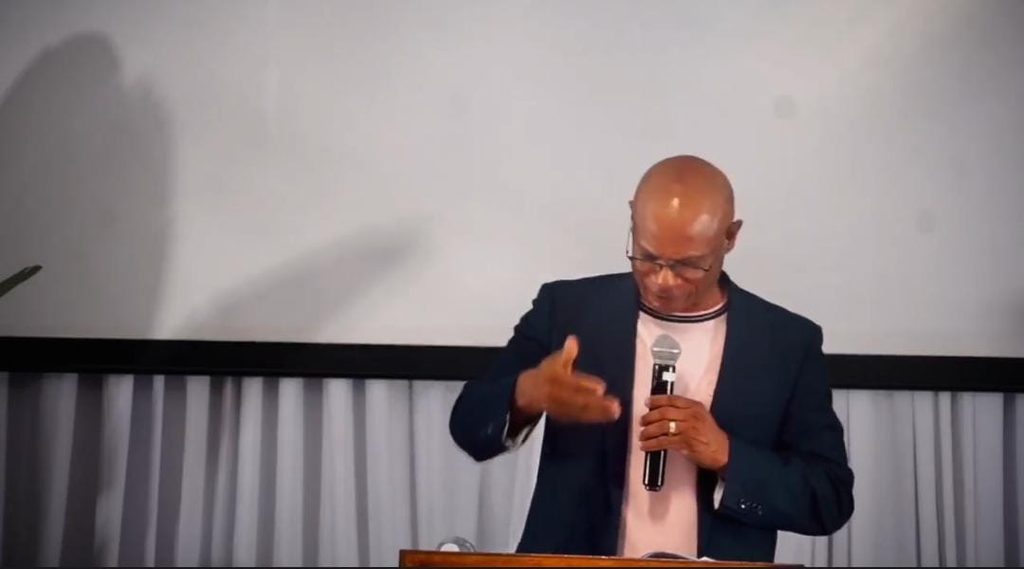
A powerful message delivered at Harvest Bible Chapel by Elder Darren Hall has challenged Christians in the Turks and Caicos Islands to examine whether their profession of faith is actually reflected in the way they live, work, conduct business and treat other people.
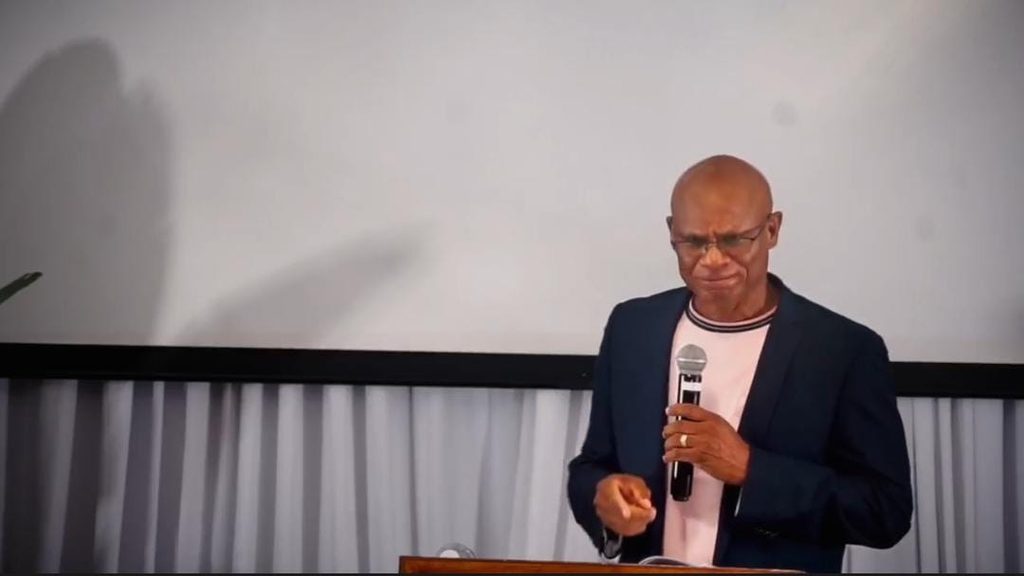
Drawing heavily from Acts Chapter 9 and the dramatic conversion of Saul on the road to Damascus, the message centred on what happens when Jesus Christ interrupts a person who is convinced that he or she is already travelling in the right direction. Elder Hall argued that Saul’s experience demonstrates that a person can be sincere, religious, educated and passionate about what they believe, yet still be profoundly wrong.
The message eventually moved beyond Saul and directly into modern life in the Turks and Caicos Islands, confronting issues including bribery, dishonest business practices, exploitation of vulnerable people, the improper use of influence, treatment of migrants and expatriates, sexual conduct and the temptation for Christians to simply accept wrongdoing because it has become culturally normal.
“A TRUE CALL INTERRUPTS YOU”
The sermon opened with a deeply personal story involving the Hall’s young son and his now late mother. He recalled hearing his son urgently calling, “Daddy, daddy, Grammy needs help,” but said that the seriousness of what was happening did not immediately register until the child repeated himself with a noticeably different tone and intensity.
That second call caused him to immediately stop what he was doing and rush to his mother, where he discovered that she was suffering a heart attack. Within approximately 15 minutes, he said, they had reached the emergency room, but the experience left him thinking deeply about what it means to truly hear someone calling.
“A true call interrupts you,” he told the congregation. “It reveals a reality you have not recognized. It demands that you stop what you are doing, get up, and respond.”

That experience became the bridge into Acts 9, where Saul was travelling purposefully towards Damascus with authority to arrest followers of Jesus. Saul was not confused about what he believed he was doing; he was convinced that his actions were justified until the risen Christ confronted him.
The preacher asked the congregation to consider what happens when the person calling is not a child, parent or friend, but Jesus Christ Himself, and when that call reveals that the direction a person has confidently followed is wrong.
SAUL HAD AUTHORITY — BUT CHRIST HAD SAUL’S FUTURE
One of the strongest themes of the sermon was the sovereignty of Christ. Saul had plans, official authorization, travelling companions and a destination, but none of those things placed him beyond the authority of Jesus.
“Saul chose Damascus as the place where he would arrest Christians, but Jesus chose the Damascus road as the place where he would arrest Saul,” the congregation was told. “Saul has letters in his hand, but Jesus has Saul’s future in his hand.”
That sovereignty, Hall explained, can be comforting because it means circumstances are not outside Christ’s control, but it can also be uncomfortable because it means human beings are not ultimately in control of their own lives.
“The divine call means Jesus has the right to interrupt our plans, challenge our assumptions, redirect our careers, confront our relationships, and assign us work we did not choose for ourselves,” he said.
The congregation was also reminded that Jesus called Saul personally by name. The preacher argued that Christ knew Saul’s history, anger, motives, education and intended destination, yet still called him and ultimately transformed the man who had persecuted the Church into someone who would proclaim the Gospel.
IT IS POSSIBLE TO BE RELIGIOUS AND STILL BE WRONG
The message then turned to what the Elder Darren Hall described as the confrontational nature of Christ’s call.
Saul believed that his persecution of Christians represented religious faithfulness. His encounter with Jesus, however, forced him to confront the possibility that what he had justified as service to God was actually opposition to God.
“It’s possible to be sincere, to be knowledgeable, to be disciplined, to be religious, and terribly wrong,” the preacher declared.
“Sincerity cannot make a false direction true. Zeal cannot sanctify disobedience. Religious activity cannot substitute for surrender to Jesus.”
The message therefore cautioned against using religion itself as protection from self-examination. The preacher argued that the call of Christ confronts false beliefs, misplaced confidence and sins that people may have learned to make respectable, rather than allowing individuals to rename disobedience as obedience.
THE MAN WHO CAME TO ARREST CHRISTIANS HAD TO DEPEND ON CHRISTIANS
The transformation of Saul was presented not merely as a private spiritual experience, but as something that radically changed his relationships and allegiance.
Before reaching Damascus, Saul viewed Christians as enemies and intended to take them prisoner. After encountering Jesus, he found himself depending upon the very community he had previously sought to destroy, including disciples who eventually helped him escape when his own life became threatened.
The sermon particularly highlighted Ananias and Barnabas. Ananias was required to approach a man he had every reason to fear, while Barnabas later stood beside Saul when other believers remained suspicious of whether his conversion was genuine.
Dr. Hall used those examples to remind the congregation that not everyone is called to play the same role. Some may be called to confront, others to encourage, advocate or quietly “hold the rope” that allows someone else to continue their work.
“Not every act of obedience is public, but every act of obedience matters to advance the Gospel of Christ,” the congregation was told.
A DIRECT CHALLENGE TO CHRISTIANS IN THE TCI
The sermon became particularly pointed when the preacher applied the message to present-day life in the Turks and Caicos Islands.
He acknowledged that the country is rapidly developing and that people from many nations are arriving with different skills, experiences and cultures. He described that diversity as an opportunity for Christians to serve people and spread the Gospel across national boundaries without leaving the Islands, but warned that rapid growth can also create serious temptations.
“When work permits are limited, housing is scarce, school spaces are competitive and contracts are valuable, we may feel pressure to use those relationships improperly, offer or accept inducements, or participate in a culture of paying to play,” he said.
The preacher then made clear that Christianity cannot be confined to Sunday worship.
“Jesus is Lord in the immigration office. He’s Lord in the classroom. He’s Lord on the construction site. He’s Lord in the boardroom. He’s Lord on the rental market. He is Lord in the government office.”
Those words effectively carried the message into some of the most important institutions and economic relationships in the Turks and Caicos Islands. The preacher argued that Christians cannot excuse questionable conduct simply by saying that it is how business is normally conducted.
“REFUSE THE BRIBES, REJECT THE DISHONEST ARRANGEMENT”
The challenge became even more explicit when the congregation was told that authority, property, employment, information and influence should never be used to exploit people who are more vulnerable.
Christians were urged not to judge another person’s worth according to nationality, economic circumstances or personal connections. Instead, the preacher called for honesty and fairness towards Turks and Caicos Islanders, expatriates, migrant workers and visitors alike.
“Refuse the bribes, reject the dishonest arrangement,” he declared. “Tell the truth, even when truth may cost you. Pay people fairly.”
It was one of the clearest applications of the sermon because it moved the message beyond theological discussion and into practical conduct. If Christianity requires surrender to Christ, the preacher’s argument was that such surrender must eventually become visible in how believers use money, power, employment and influence.
CHRISTIANS ALSO CHALLENGED OVER SEXUAL CONDUCT
The sermon did not stop with business practices or public life. Dr. Hall also addressed sexual conduct, arguing that Christians are being called to live differently from cultural messages that suggest personal desire should operate without boundaries.
“Our bodies do not belong to tourism, it does not belong to social media, it does not belong to appetite or to opportunity. Our bodies belong to the Lord,” he said.
The message addressed residents and visitors, married and unmarried people, heterosexual and same-sex attracted persons, with the preacher stating that the Christian understanding of holiness calls believers away from lust, adultery, promiscuity, pornography, exploitative relationships, same-sex sexual activity and other sexual practices outside what he described as God’s design.
However, the preacher stressed that the message of the Church should not be that people must first make themselves morally clean before Christ will receive them. Instead, he argued that grace welcomes sinners while simultaneously calling them towards transformation.
“We may be unclean, but we are not unwanted,” he said. “Grace welcomes us as we are. Holiness means that grace does not leave us as we are.”
Those struggling with areas of compromise were encouraged not to hide them, but to bring them into the light, confess them, seek assistance and allow the Church community to walk alongside them.
THE QUESTION IS HOW TCI CHRISTIANS WILL RESPOND
Ultimately, the message returned to Saul and the significance of his response to the risen Christ. Saul began Acts 9 attempting to silence the name of Jesus, but emerged publicly proclaiming the very name he had attempted to suppress.
The preacher argued that genuine encounters with Christ inevitably produce changed allegiance. That change may not make every Christian a preacher, but it should eventually become visible through a person’s words, conduct, priorities and relationships.
For Harvest Bible Chapel, therefore, the challenge arising from Acts 9 was not simply to admire the transformation of Saul as an event that happened centuries ago. The more difficult question placed before the congregation was whether Christians today are prepared to allow the same Christ to confront areas of their own lives that require surrender and change.
The message was ultimately a call for Christianity that reaches beyond church services and religious language into immigration offices, classrooms, businesses, construction sites, rental properties, government offices, relationships and private conduct.
The risen Christ who interrupted Saul’s journey, the congregation was reminded, still has the authority to interrupt human plans today. And if His call is truly heard, the preacher’s message was unmistakable: it demands a response.