Governor uses 50th anniversary of ministerial government to honour the territory’s progress while warning that public confidence must continually be earned and today’s decisions will shape what future generations inherit
Tuesday 8th September, 2026 – PROVIDENCIALES, Turks and Caicos Islands
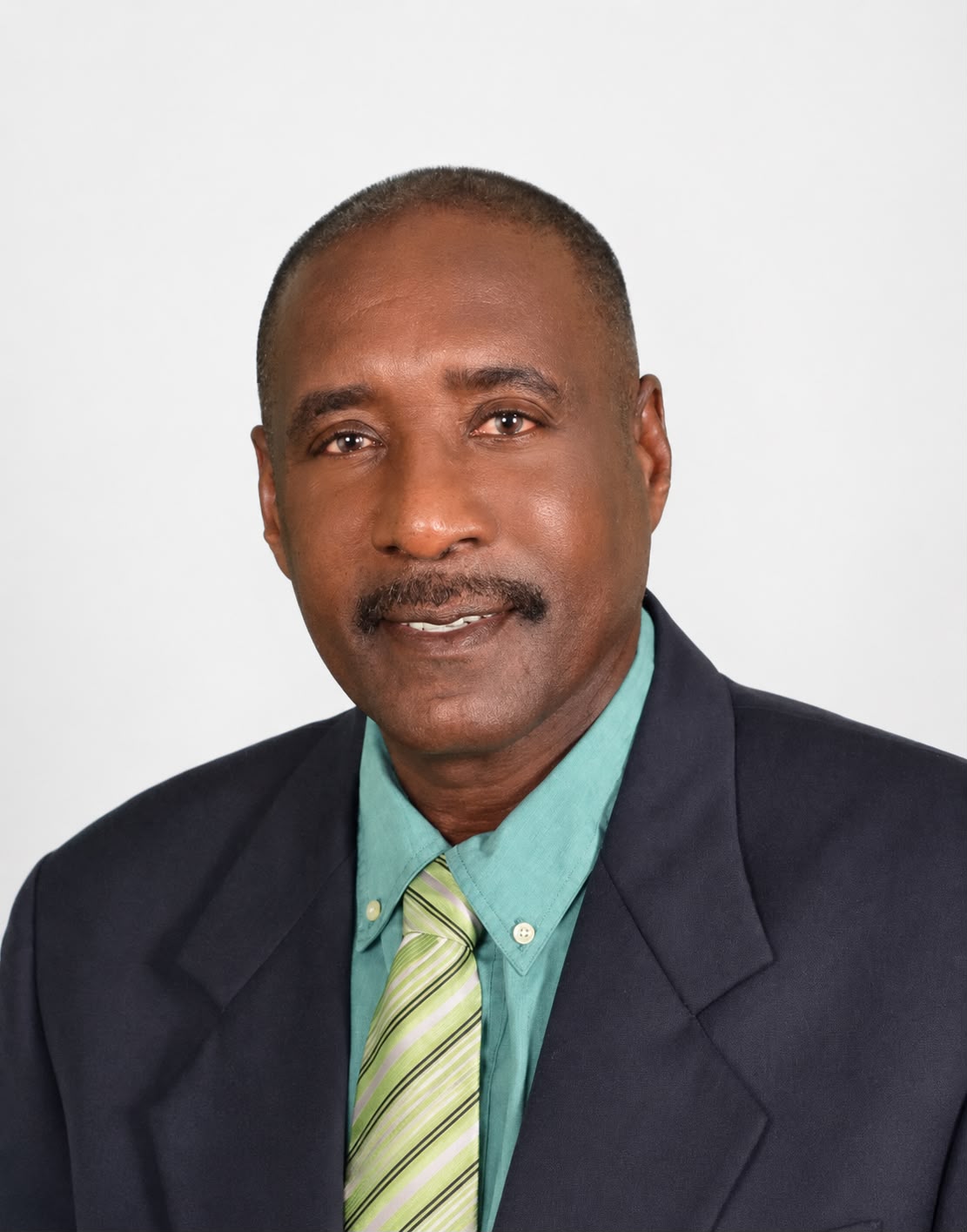
— Governor Her Excellency Dileeni Daniel-Selvaratnam says the Turks and Caicos Islands should enter the next 50 years of ministerial government with ambitions matching the extraordinary progress of the past five decades, while ensuring that integrity, accountability, service and responsibility remain at the centre of the country’s development.

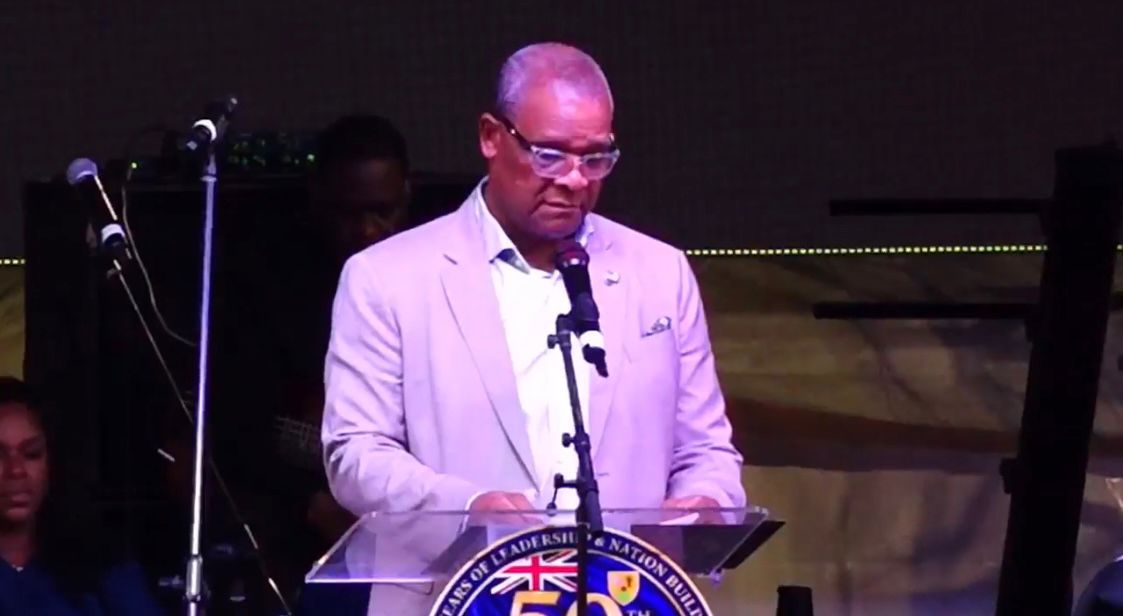
Addressing the national gathering at the National Stadium marking 50 years of ministerial government, the Governor reflected on the transformation of the Turks and Caicos Islands, the importance of faith and community in sustaining its people, and the responsibility now resting upon the present generation to strengthen what it has inherited.
Rather than treating the anniversary solely as a celebration of the past, Daniel-Selvaratnam presented it as a point of transition. The decisions made by today’s leaders, institutions and ordinary citizens, she said, will determine the country inherited by those who gather decades from now to commemorate 100 years of ministerial government.
“Fifty years have brought the Turks and Caicos Islands to this moment,” the Governor said. “The next 50 begins with us all.”
A NATIONAL GATHERING ACROSS COMMUNITIES AND DENOMINATIONS
Daniel-Selvaratnam described it as a privilege to join Turks and Caicos Islanders at the National Stadium for an occasion bringing together people from different denominations and communities through music, prayer and thanksgiving.
She said the location itself carried symbolism.
“A stadium is built for collective endeavor,” she said. “It is where individual effort becomes shared achievement, where voices rise together, and where the energy of a people can be felt.”
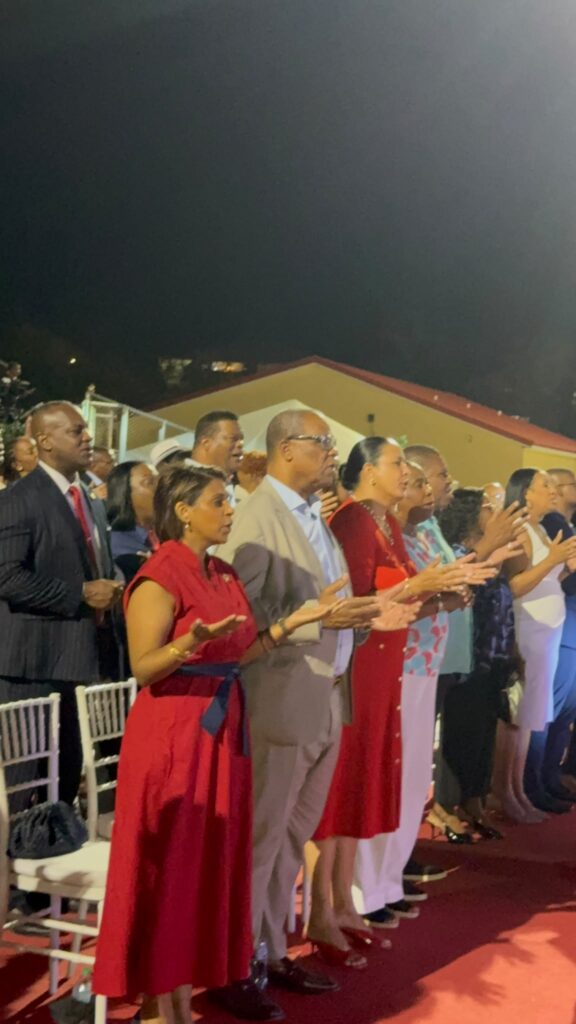
For the Governor, that made the National Stadium an appropriate place not only to look back at what the Turks and Caicos Islands has accomplished, but to renew a collective commitment to what must still be built.
Her address repeatedly returned to that idea of collective responsibility. Government and political leaders have important roles, she said, but the work of building a country extends far beyond Parliament, Cabinet and other formal institutions.
FAITH HAS BEEN PART OF THE FOUNDATION
Speaking during a national church service, Daniel-Selvaratnam placed considerable emphasis on the historic role Christianity and faith have played in Turks and Caicos society.
“Faith has been woven deeply into the life of the Turks and Caicos Islands,” she said. “It has sustained families through hardship, strengthened communities in times of uncertainty, and inspired generations to believe that tomorrow could be better than today.”
Quoting Psalm 127 — “Unless the Lord builds the house, the builders labor in vain” — the Governor said the scripture was particularly relevant as the country considered what had been built during the previous 50 years.
But she said attention must also be given to the foundations required for what comes next.
Those foundations, Daniel-Selvaratnam said, include “faith, integrity, justice, compassion, service, and responsibility for one another.”
The Governor’s message was that physical development and economic advancement alone cannot define the success of a country. The strength of the Turks and Caicos Islands must also be measured by the values of its people and the quality of the institutions and communities they maintain.
“THE TRUE WEALTH” OF TCI IS ITS PEOPLE
Daniel-Selvaratnam acknowledged the enormous transformation that has taken place within the lifetime of many people who attended the anniversary gathering.
Communities have expanded, institutions have matured and economic opportunities have increased. The modern Turks and Caicos Islands, she said, has changed in ways earlier generations may have struggled to imagine.
“These islands are now known and respected far beyond these shores,” she said.
But the Governor cautioned against measuring the country’s advancement only through buildings, investment and economic growth.

“The true wealth of the Turks and Caicos Islands is not only in buildings, investment, or economic growth; it is in its people,” she said.
She specifically recognised families that held communities together, churches that provided refuge and fellowship, and people who served the territory both publicly and without recognition because they believed the country was worth building.
Today’s generation, she said, stands on foundations created through their sacrifices.
“We are the beneficiaries of their sacrifice, courage, and perseverance,” Daniel-Selvaratnam said. “Our gratitude for that inheritance must be matched by a clear understanding of our responsibility for it.”
EVERY GENERATION INHERITS SOMETHING IT DID NOT BUILD ALONE
One of the central themes of the Governor’s address was stewardship.
Every generation, she said, receives an inheritance produced partly by the sacrifices and decisions of those who came before it. The responsibility of the present generation is therefore not simply to enjoy or preserve what it received, but to determine whether it can leave something stronger behind.
“Every generation receives something it did not create alone,” Daniel-Selvaratnam said. “Each must decide whether it will merely preserve that inheritance or strengthen it for those yet to come.”
She acknowledged that this responsibility rests particularly heavily upon those entrusted with public office, but stressed that leadership should not be defined solely by political positions or official titles.
Leadership, she argued, exists anywhere someone accepts responsibility for improving the lives and opportunities of others.
LEADERSHIP IS NOT LIMITED TO POLITICIANS
Daniel-Selvaratnam identified teachers, parents, grandparents, pastors, public servants, entrepreneurs, volunteers and young people as examples of individuals exercising leadership throughout Turks and Caicos society.
A teacher recognising potential in a child is demonstrating leadership, she said. So too is a parent or grandparent passing down values, a pastor supporting a struggling family, a public servant strengthening essential services or an entrepreneur creating opportunities.
She also highlighted volunteers who contribute without seeking recognition and young people willing to imagine a better future.
“These are all acts of leadership,” Daniel-Selvaratnam said. “Together, they form the moral and civic strength of this nation.”
The Governor’s definition broadened the responsibility for the country’s future beyond Government. If nation-building is collective work, then the quality of the country eventually inherited by future generations will be influenced by decisions made throughout society rather than by political leaders alone.
“PUBLIC CONFIDENCE MUST NEVER BE ASSUMED”
The Governor then delivered one of the most significant passages of her address concerning those exercising authority.
Drawing upon the Gospel of Luke and its teaching that much will be required from those to whom much has been given, Daniel-Selvaratnam said leadership should be understood as stewardship.
“Whatever our position, influence, talents, or opportunities, we are called to use them faithfully and for purposes greater than ourselves,” she said.
She identified integrity, humility, courage and accountability as essential qualities of genuine leadership. Those exercising authority, she said, must also be prepared to look beyond immediate concerns and place the country’s long-term interests above personal benefit.
“True leadership requires integrity when no one is watching, humility to listen, courage to act, and accountability for the consequences of our decisions,” Daniel-Selvaratnam said.
She added: “It asks us to look beyond the immediate and to place the long-term interests of the nation above personal advantage or temporary comfort.”
The Governor then issued a particularly important reminder to institutions and those holding public office:
“Public confidence must never be assumed; it must be continually earned through principled and faithful service.”
WHAT SHOULD THE NEXT TCI LOOK LIKE?
Looking toward the future, Daniel-Selvaratnam outlined several aspirations she believes should guide the next chapter of the country’s development.
“We should seek a nation in which every child is safe, valued, and able to see a future filled with possibility,” she said.
She called for institutions that command public confidence and a public service characterised by excellence and integrity. She also said economic development should create opportunities while protecting the natural environment that remains one of the country’s greatest inheritances.
Her vision therefore connected continued economic advancement with institutional strength, social responsibility and environmental protection.
The challenge, she suggested, is not merely continuing the rapid development witnessed during the previous decades, but ensuring that development strengthens the country and widens opportunities for the people living within it.
NO GOVERNMENT OR PARTY CAN BUILD THE COUNTRY ALONE
Daniel-Selvaratnam also rejected the idea that the country’s future can be delivered by any single institution.
“No government, institution, party, church, business, or generation can achieve that future alone,” she said. “Nation-building has always been collective work.”
That work, she said, takes place in Parliament and classrooms, churches and workplaces, homes and neighbourhoods.
“It is advanced wherever we choose responsibility over indifference, service over self-interest, and common purpose over division.”
The statement was particularly relevant during an anniversary centred upon ministerial government because it placed formal political leadership within a much larger national framework. Governments can create policies and institutions can administer them, but Daniel-Selvaratnam argued that the strength of the country ultimately depends upon the participation and conduct of its people.
PROSPERITY MUST NOT WEAKEN COMMUNITY
The Governor warned that the considerable progress achieved by the Turks and Caicos Islands carries risks of its own.
“This anniversary, therefore, asks more of us than remembrance; it calls us to recommit ourselves to the next 50 years,” she said.
The present generation, she argued, can choose not to allow progress to produce complacency. It can also ensure that prosperity does not weaken the strong sense of community upon which earlier generations depended.
“We can choose that progress will not make us complacent, that prosperity will not weaken our sense of community, and that disagreement will never become stronger than our shared commitment to the success of these islands,” Daniel-Selvaratnam said.
Her comments acknowledged that disagreement is an inevitable feature of political and national life, but suggested it should never become powerful enough to overwhelm the shared interest Turks and Caicos Islanders have in the country’s success.
WHAT WILL THEY SAY AT 100 YEARS?
Daniel-Selvaratnam concluded her address by asking the audience to imagine a future generation gathering to celebrate 100 years of ministerial government.
Those people, she said, will live with the consequences of choices being made today.
“They will inherit the consequences of the choices we make today,” she said.
The Governor said she hopes that generation will look back and conclude that today’s Turks and Caicos Islanders did more than simply celebrate what they inherited.
“May they look upon this generation and say that we did not simply celebrate what we inherited, but we strengthened it,” she said.
She hoped future generations would be able to say that the present generation protected what was precious while having the courage to change what no longer served the country’s people.
“May they say that we protected what was precious, changed what no longer served our people, widened the doors of opportunity, strengthened our institutions, and cared for those most in need.”
Daniel-Selvaratnam also returned to her definition of leadership, saying she hoped future generations would recognise that those serving today understood leadership “not as status, but as service; not as privilege, but as responsibility.”
THE NEXT 50 YEARS “BEGINS WITH US ALL”
Unlike several political figures who have used the 50th anniversary to directly address the possibility of an independent Turks and Caicos Islands, Daniel-Selvaratnam’s address did not centre on independence or prescribe what the territory’s constitutional status should be when the next major anniversary arrives.
Deputy Speaker Hon. Jameka Williams has said she would like to see independence within five to ten years. Health Minister Hon. Kyle Knowles has described an independent Turks and Caicos Islands as the ultimate goal while emphasising that the process must be driven by Turks and Caicos Islanders, while PDM Leader Hon. Doug Parnell has said he believes independence should come considerably sooner than the end of another 50-year period.
The Governor’s speech instead concentrated on the qualities she believes must sustain the country regardless of the constitutional debates that unfold during those decades: strong institutions, public confidence, integrity, accountability, collective responsibility and service.
Her message was ultimately directed not simply toward politicians but toward everyone who will participate in shaping the Turks and Caicos Islands that the next generation inherits.
“Fifty years have brought the Turks and Caicos Islands to this moment,” Daniel-Selvaratnam said. “The next 50 begins with us all.”
She closed by asking God to grant the country wisdom for the journey ahead, unity in common purpose and faith in what remains possible.
“And may He continue to bless the people of these beautiful-by-nature islands.”