Marking 50 years of ministerial government, Premier Charles Washington Misick warns that constitutions and institutions alone cannot protect a country whose moral conscience is allowed to erode
Tuesday 1st September, 2026 – PROVIDENCIALES, Turks and Caicos Islands
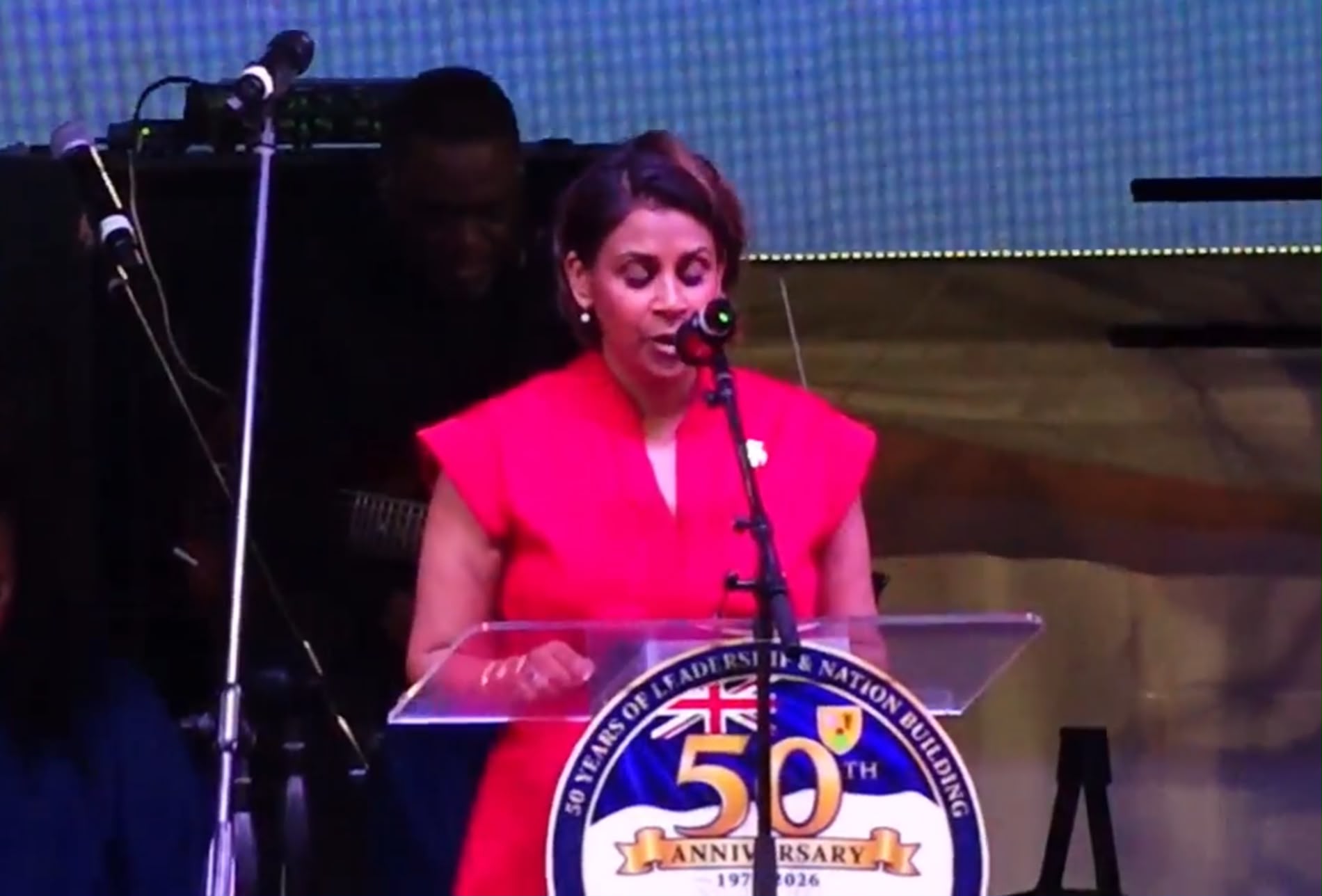
— Premier Hon. Charles Washington Misick used the 50th anniversary of ministerial government to deliver a deeply reflective message on the moral responsibilities that accompany self-government, warning that laws, constitutions and institutions cannot by themselves protect the Turks and Caicos Islands if the character and conscience of its people and leaders are allowed to deteriorate.
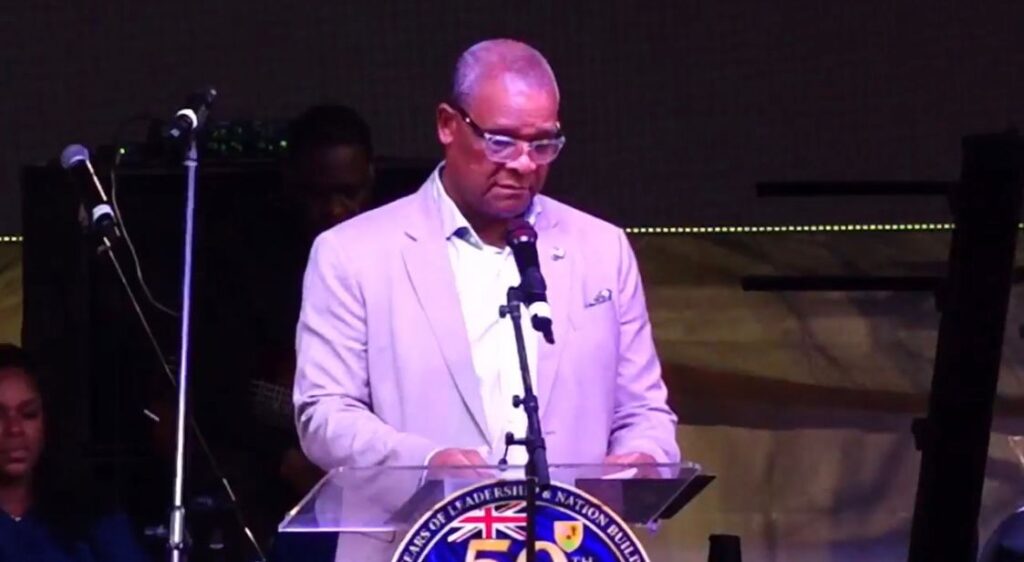
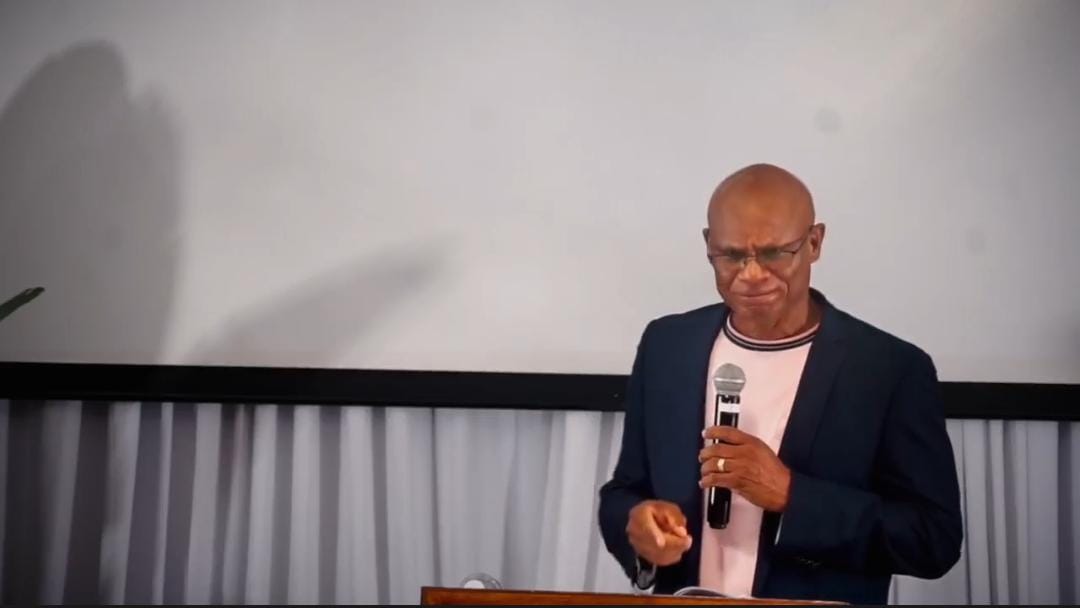
Rather than using the occasion simply to recount the political achievements of the past five decades, Misick challenged Turks and Caicos Islanders to consider a more difficult question about what the country has become during that journey. Speaking in a church setting before members of the clergy, political representatives and the wider community, the Premier said the anniversary should be as much an examination of the nation’s character as a celebration of its constitutional development.
“We do not gather tonight merely to review our history; we gather to examine our hearts,” Misick said. “Parliament will hear the speeches, the archives will keep the records, but the church must always ask a different question: Not what have we built, but who have we become?”
It was a speech that moved beyond conventional anniversary celebrations and directly confronted issues of public integrity, accountability, inequality, corruption, leadership and the responsibility of a self-governing people to correct their own failures.
50 YEARS AGO, A “QUIET REVOLUTION” BEGAN
Misick described the beginning of ministerial government 50 years ago as a “quiet revolution” in the political development of the Turks and Caicos Islands.
Unlike independence struggles elsewhere that involved dramatic public confrontation, he said the change in the Turks and Caicos Islands occurred through the gradual assumption of responsibility by a people who had previously been governed largely from outside.
“Fifty years ago, this country entered a quiet revolution,” Misick said. “There were no barricades in the streets, no proclamations from palace balconies. A people long administered from far simply began the more exacting work of governing themselves.”
That process, according to the Premier, produced an important lesson about the difference between obtaining constitutional authority and possessing the character necessary to preserve it.
“A constitution may open the door to self-government; only character keeps that door from swinging back upon us,” he said.
That statement became one of the central themes of Misick’s address.
While other political figures speaking during the 50th-anniversary period have publicly discussed independence and the future constitutional status of the Turks and Caicos Islands, Misick’s church address concentrated heavily on what must exist within a society for self-government itself to succeed.
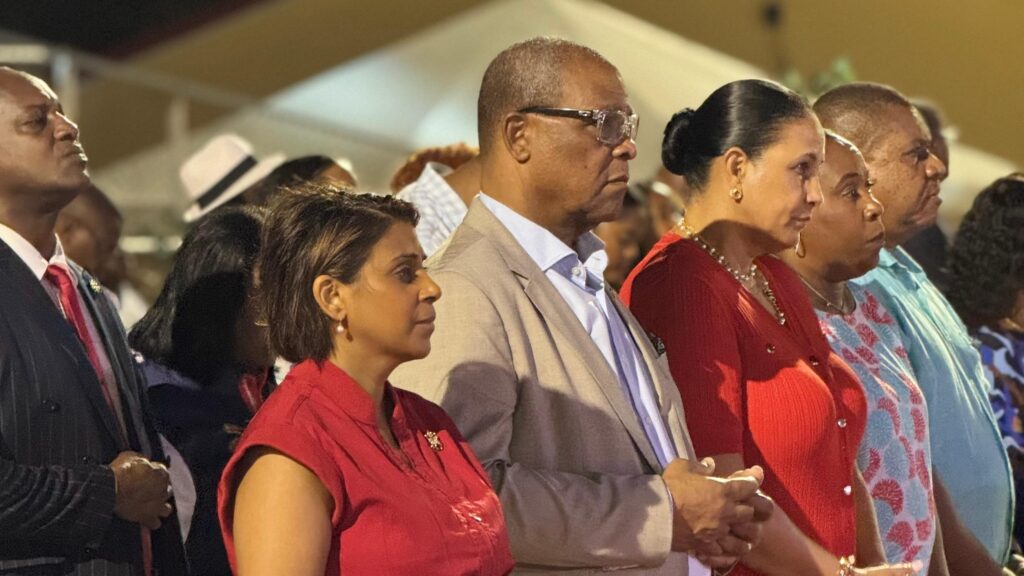
“LONG BEFORE WE HAD A WRITTEN CONSTITUTION, WE HAD A PRAYING PEOPLE”
The Premier traced what he considers the country’s deeper constitutional foundation beyond written laws and political institutions.
“The faith that held us before the law did is our constitution,” he said. “Long before we had a written constitution, we had a praying people.”
Misick recalled generations of Turks and Caicos Islanders who lived through economic hardship, dangerous seafaring conditions and periods when families were forced to separate in search of employment abroad. Without the wealth, technology and institutions available to the modern Turks and Caicos Islands, he said earlier generations relied heavily upon faith, community and responsibility toward one another.
“When the salt ponds failed, they prayed. When the crops failed, they prayed. When the boats did not return, they prayed,” Misick said. “When families were scattered across the sea in search of work, they held each other and they prayed.”
According to Misick, those generations possessed something that could never simply be created through constitutional legislation.
“Our foreparents did not possess our wealth, our technology, or our institutions, but they possessed something no Order in Council can afford or can confer,” he said. “They possessed a conscience formed by faith, community bounded by obligation, and a belief that they were stewards of something larger than themselves.”
He described that collective conscience as the country’s “first constitution.”
“It was written not on paper, but on our hearts,” Misick said. “And it is the one we must never allow to be suspended.”
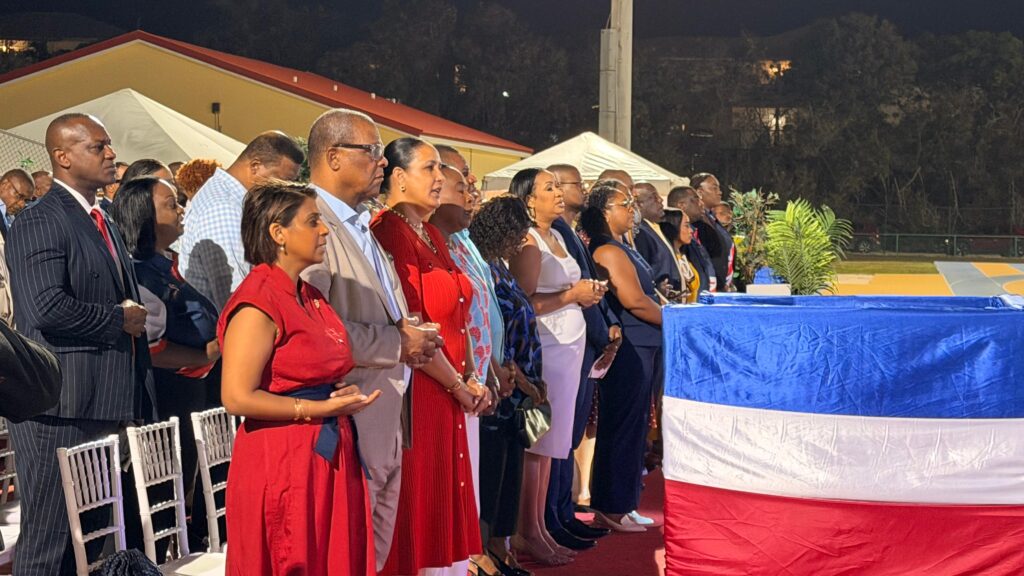
“GOOD LAWS CANNOT SUBSTITUTE FOR GOOD CHARACTER”
Misick did not identify or recount individual political crises the Turks and Caicos Islands has experienced. Instead, he said those periods had collectively taught the country that laws and institutions have limitations when the people responsible for operating them lose their moral direction.
“We have learned that institutions matter, but institutions cannot redeem a society that has lost its moral bearings,” the Premier said.
He then identified several warning signs of that erosion.
“We have learned that a nation can be brought low by a quiet erosion of conscience in its system, when public office is treated as entitlement rather than trust, when inequality hardens into indifference, when governance becomes performance instead of service.”
The comments amounted to a pointed warning from the head of Government about the responsibilities accompanying public office.
For Misick, the success of a political system cannot simply be measured by whether the territory possesses a constitution, functioning Parliament, government departments or other institutions. Those structures remain dependent upon the decisions made by the people operating within them.
“Good laws cannot substitute for good character,” he said.

A COUNTRY’S MORAL CONDITION IS FOUND IN SMALL DECISIONS
Misick argued that national renewal does not necessarily begin with major ceremonies, political speeches or legislative announcements.
Instead, he said the moral condition of a country is revealed through everyday decisions made by ordinary people and those exercising authority.
He pointed to the civil servant who refuses a bribe, the teacher who goes beyond what is formally required, a young person who insists upon fairness and a leader who chooses transparency even when another course might be easier.
“The moral condition of a country is never abstract,” Misick said. “It is revealed in its daily decisions.”
Drawing upon scripture, he then applied the biblical warning about gaining the world while losing one’s soul not simply to individuals, but to entire nations.
“For what shall it profit a man, if he shall gain the whole world, and lose his own soul?” Misick quoted.
“My people, I believe nations must also answer that question, too.”
THE SOUL OF A NATION CANNOT BE PURCHASED
The Premier defined the “soul” of a country as something much deeper than its economy or physical development.
“The soul of a nation is its conscience — the unseen fabric of shared values, mutual obligations, and collective responsibility that holds a people together,” he said.
Misick warned that such a national conscience cannot be created by legislation or acquired through economic development.
“You cannot legislate it, you cannot import it, you cannot purchase it with foreign investment,” he said.
Instead, he argued that those values are developed inside families, religious congregations and communities and are either strengthened or undermined by the example set by people entrusted with authority.
“It is taught in homes, it is nurtured in congregations, it is modeled or betrayed by those of us entrusted with authority.”
That responsibility, Misick said, means the church has a role extending beyond simply praying for the Government or asking for God’s blessing upon the state.
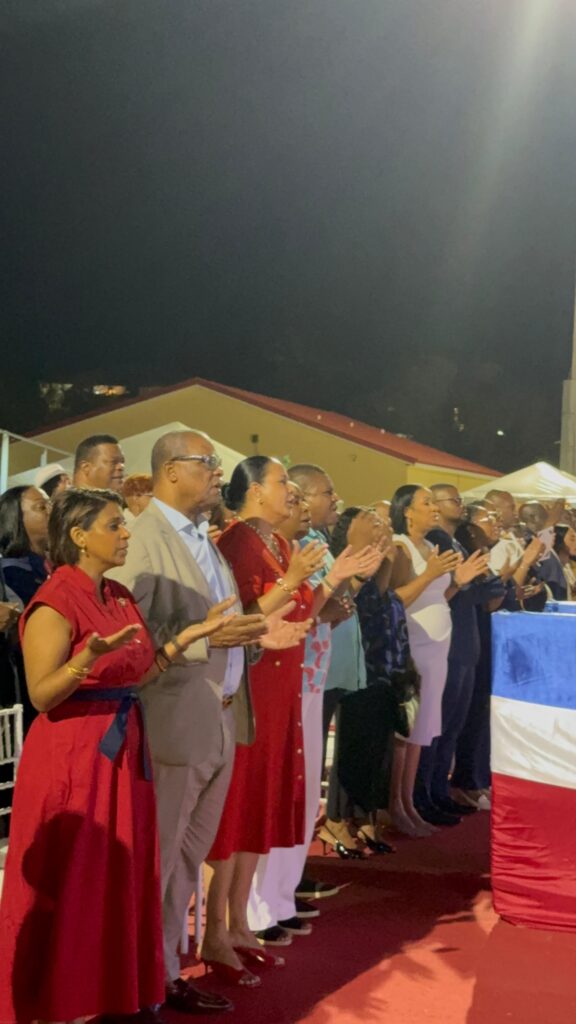
PREMIER ASKS CHURCH TO “BUILD CONSCIENCE, FORM CHARACTER”
Misick directly challenged the church to perform work that government institutions cannot accomplish on their own.
“I come asking the church to do what the state cannot do: Build conscience, form character, raise children who understand that freedom is a responsibility before it is a right,” he said.
The Premier argued that the next phase of the country’s development requires more than additional administrative machinery.
“The next phase of our national journey does not demand more administration; it demands moral renewal,” Misick said.
That renewal, he explained, requires a recognition that self-government does not merely provide Turks and Caicos Islanders with the right to govern themselves. It also places upon them an obligation to exercise that authority responsibly.
“Self-government is not merely a right to rule ourselves, but the responsibility to rule ourselves rightly,” he said.
“THE SUREST DEFENSE OF OUR CONSTITUTION IS NOT LONDON’S RESTRAINT”
Perhaps the strongest political passage of Misick’s speech came when he addressed the responsibility of Turks and Caicos Islanders to identify and correct wrongdoing within their own society rather than relying upon outside intervention.
“So let me say plainly to those who are quick to invite judgment from outside — and let this be written into the conscience of every Turks and Caicos Islander: A self-governing people must possess the moral courage to course-correct,” Misick said.
He said that includes confronting wrongdoing before it becomes entrenched and strengthening safeguards before institutions fail.
“To confront wrongdoing early, to strengthen safeguards before they fail, to say no to our own before others say no to all of us,” he continued.
Misick then delivered one of the most significant lines of the address:
“The surest defense of our constitution is not London’s restraint; it is our own discipline.”
He followed it with an equally direct declaration:
“Nations that police themselves are never policed by others.”
The remarks placed responsibility for preserving self-government firmly upon Turks and Caicos Islanders themselves. Rather than suggesting that constitutional security depends principally upon restraint from Britain, Misick argued that local discipline, accountability and willingness to confront wrongdoing provide the strongest protection.
PUBLIC OFFICE IS A TRUST, NOT AN ENTITLEMENT
Misick also directed part of his message specifically toward himself and others holding public office.
“To those of us in public office, let us remember that we are stewards and not owners,” he said. “Authority is always borrowed.”
The Premier said every generation temporarily receives responsibility for the country and will ultimately be judged by what it leaves behind.
“Every generation receives this country in trust, and the measure of our time is what we have left behind,” he said.
The statement reinforced his earlier warning against treating public office as an entitlement. In Misick’s description, political authority belongs neither permanently nor personally to the people exercising it; it is something temporarily entrusted to them on behalf of the country.
His comments therefore placed the responsibility for moral leadership not only upon future generations, civil servants or the wider public, but directly upon the political class of which he is a part.
“WHEN WE DRIFT, CALL US BACK”
Misick concluded by again addressing the church and asking religious leaders not to remain silent when the country or its leaders move away from the principles they should uphold.
“To the church, guard the soul of the nation,” he said. “When we drift, call us back. When we grow proud, humble us. When we grow weary, strengthen us.”
He then turned toward prayer, asking Almighty God to grant wisdom to those who lead and courage to those who serve.
Misick also warned against allowing the country’s growing prosperity to separate Turks and Caicos Islanders from the values and identity that sustained previous generations.
He prayed that God would “keep prosperity from making us strangers to ourselves,” before invoking the Psalmist’s warning: “Except the Lord build the house, they labor in vain that build it.”
“WE WERE HANDED AN UNFINISHED PROMISE”
Fifty years after the beginning of ministerial government, Misick described the country’s political and moral journey as unfinished.
“Fifty years ago, we were handed an unfinished promise,” he said. “It remains unfinished still, because the soul of a nation is never finished.”
For the Premier, each generation must actively protect what it inherits. Progress achieved by one generation cannot guarantee that the values sustaining self-government will survive into another.
“It is guarded generation by generation, or it is lost,” he said.
Misick’s message differed in emphasis from the explicit independence positions expressed by several other political figures during the anniversary period. Deputy Speaker Hon. Jameka Williams has called for the Turks and Caicos Islands to strive for independence within five to ten years, Health Minister Hon. Kyle Knowles has described independence as “ultimately the goal,” and PDM Leader Hon. Doug Parnell has said he believes the country will become independent well before another 50 years have passed.
In this particular address, Misick did not set out an independence timetable. Instead, his message addressed a question that would remain relevant under any future constitutional arrangement: whether Turks and Caicos Islanders possess the institutional discipline, personal integrity and collective moral responsibility required to govern themselves well.
His warning was that constitutional advancement without corresponding character would be insufficient.
His challenge to political leaders was to remember that authority is borrowed.
His challenge to the church was to guard the nation’s conscience.
And his challenge to Turks and Caicos Islanders was to understand that the strongest protection for self-government will ultimately come not from outside the country, but from the country’s willingness to hold itself accountable.
“May we guard it well,” Misick said. “May we hand it on to the next generation intact.”