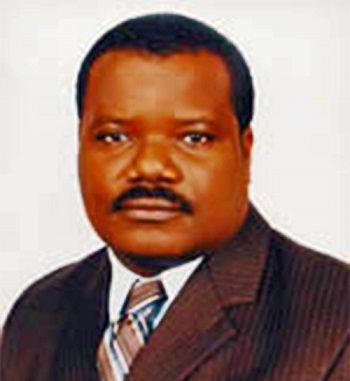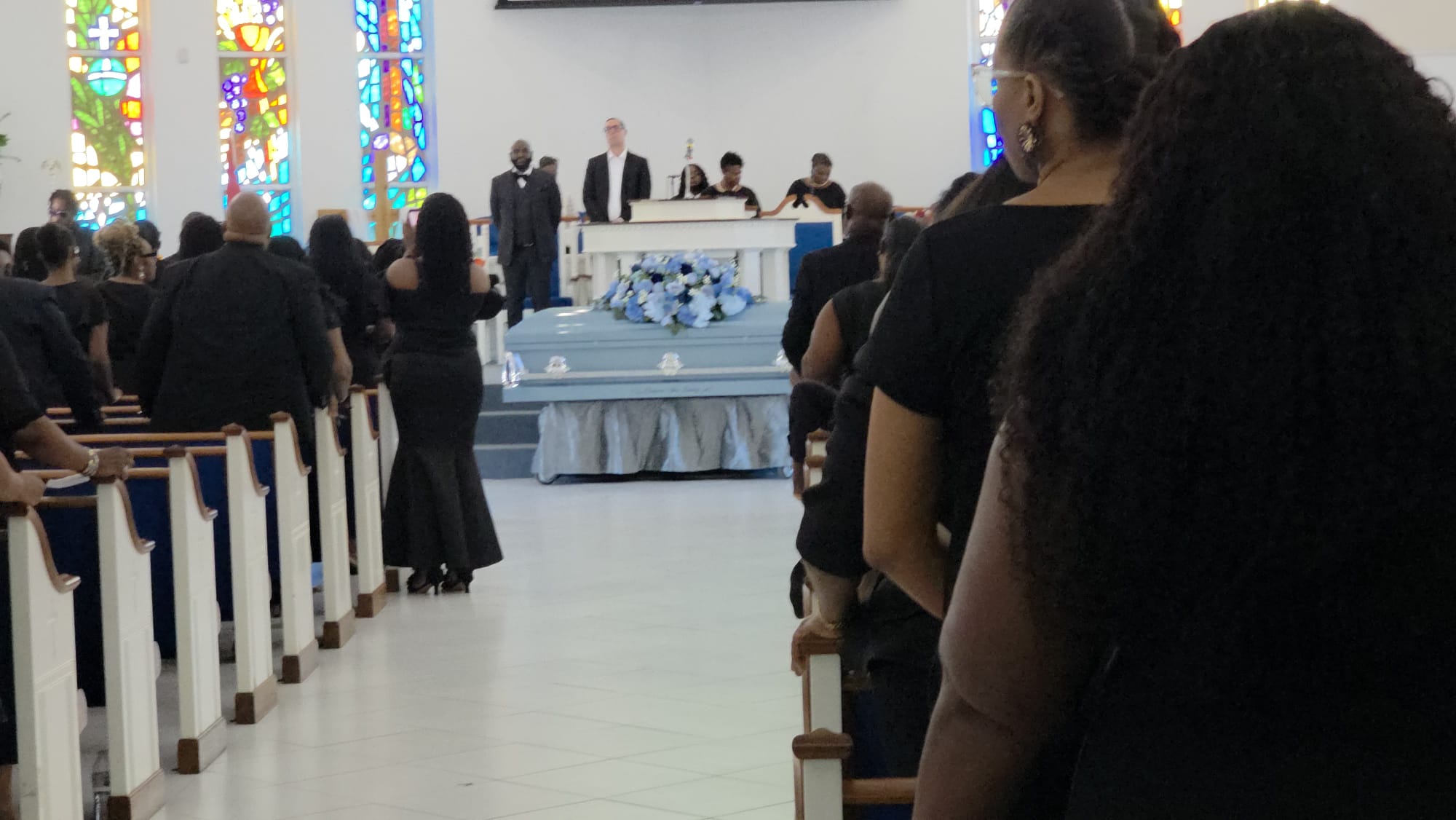
The Turks and Caicos Islands legal fraternity, the Anglican community in the Turks and Caicos Islands and The Bahamas, countless residents in both countries are mourning the passing of veteran Attorney-at-Law Arthur Hamilton Sr., a man remembered not simply for the cases he fought inside the courtroom, but for the lives he tried to influence after the courtroom doors closed.
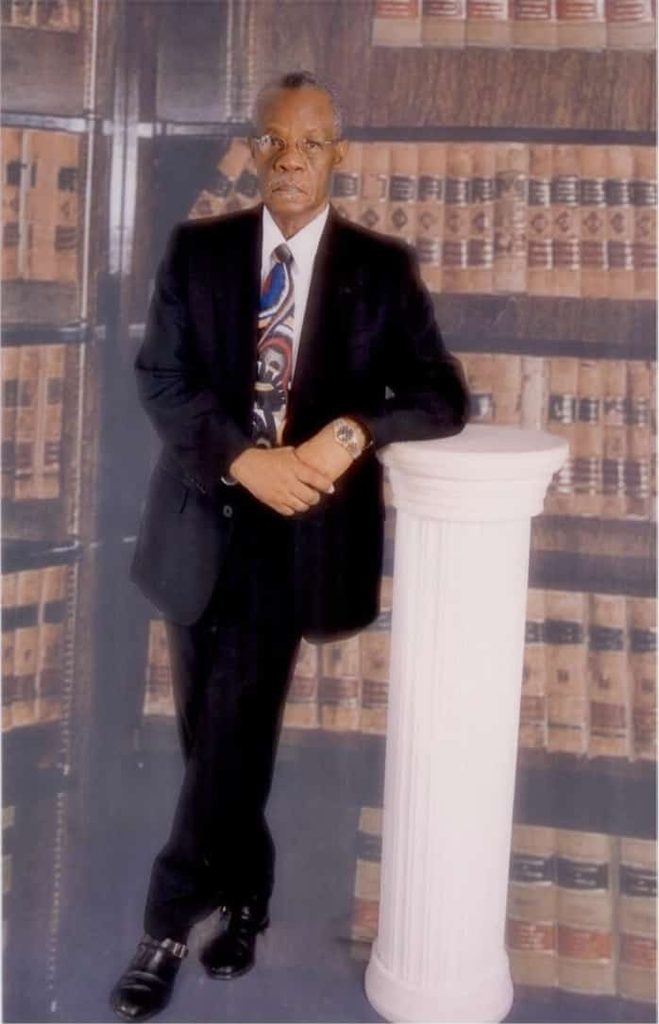
For many years, particularly during a highly active period from around 2007 through the following decade, Hamilton was a familiar figure in the criminal courts of the Turks and Caicos Islands. He appeared before the Magistrate’s Court, Supreme Court and Court of Appeal, representing persons accused of offences ranging from relatively minor matters involving juveniles to some of the most serious criminal allegations to come before the courts.
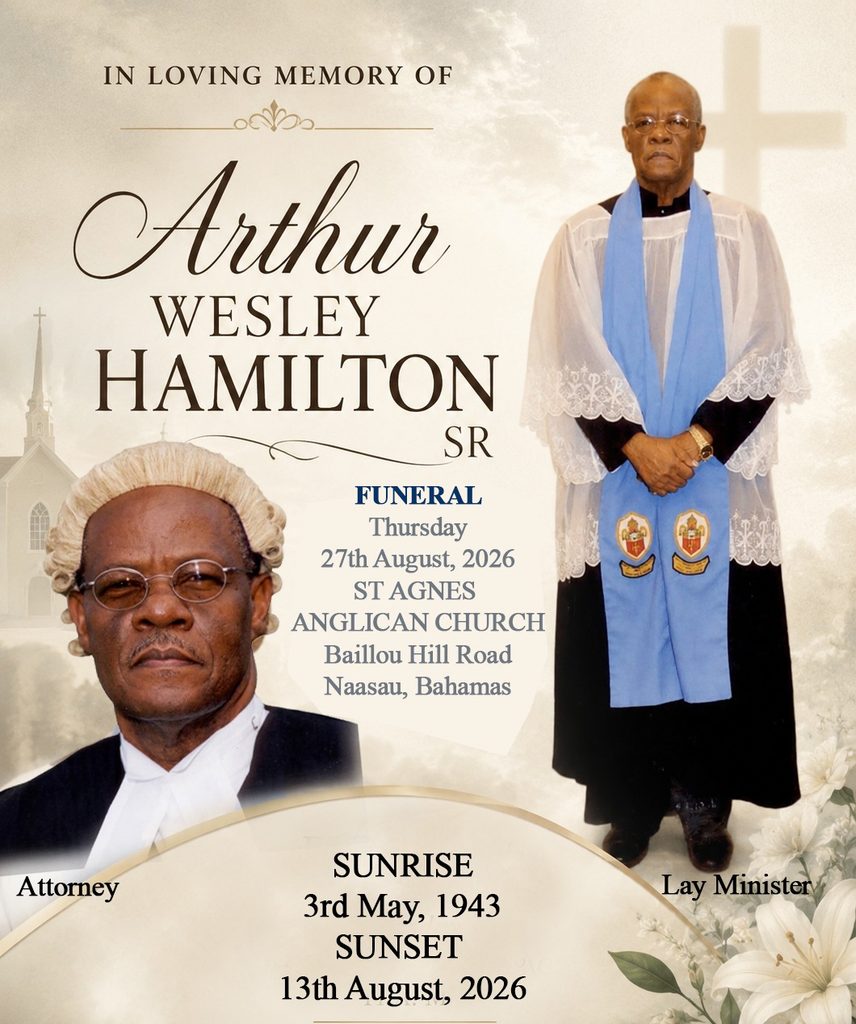
The Turks and Caicos Islands Bar Association, announcing his passing on August 13, described him as a longstanding and respected member of the profession who devoted many years to both the practice of law and the administration of justice. His work was not confined to criminal defence. He also handled civil and immigration matters and served the justice system as a member of an Employment Tribunal panel.
Yet those formal descriptions tell only part of the Arthur Hamilton story.
A DEFENCE ATTORNEY WHO WOULD TAKE THE MOST DIFFICULT CASES
Hamilton developed a reputation as one of the attorneys the courts could turn to when an accused person needed representation, including cases involving defendants and allegations that others might have preferred not to touch.
During his busiest years, he became heavily involved in the Legal Aid system and represented an extraordinary cross-section of defendants. They included young people finding themselves before the criminal courts, repeat offenders and persons accused of extremely serious crimes.
The allegations against a person did not determine, in Hamilton’s mind, whether that individual deserved a lawyer.
His guiding principle was that everyone appearing before the courts was entitled to representation and that providing a proper defence to someone accused of a terrible crime was not the same as approving of the crime itself. He understood the defence lawyer’s role as part of the administration of justice: the prosecution had its duty, the Court had its duty, and the accused was equally entitled to someone prepared to fearlessly perform the duty of defence counsel.
It was an approach that sometimes placed Hamilton in difficult encounters with law-enforcement authorities. He was known for attending police stations when clients needed assistance and challenging police actions when he believed the rights of the person he represented required protection. Yet those disagreements did not transform him into a disrespectful advocate. The same lawyer who could firmly challenge the police or prosecution maintained an extraordinary reverence for the courts.
Hamilton could encounter a judge or magistrate outside the courthouse — in a supermarket, parking lot or elsewhere in the community — and still extend the respect he believed belonged to judicial office.
That temperament is among the characteristics repeatedly mentioned by those now remembering him.
“A LAWYER OF LAWYERS”
Bar Association President Mark A. Fulford, who had the opportunity to conduct a criminal trial alongside Hamilton, recalled seeing his methods from a position few others could — not across the courtroom, but beside him.
Fulford said that working alongside Hamilton gave him a greater appreciation of his patience, experience and respect for the Court, together with the seriousness with which he approached the responsibility of representing someone whose liberty was at stake.
According to Fulford, Hamilton represented a generation that understood that a lawyer could advocate forcefully without becoming hostile or discourteous.
“Arthur came from a generation of lawyers who understood that you could be a determined advocate without being discourteous, and that respect for the Court never required you to surrender an inch of your client’s case.”
Fulford described that example as one worth preserving for younger members of the Bar.
That description closely reflects the Hamilton remembered by those who watched him practise. He could defend his client’s position vigorously while maintaining respect for judges, magistrates, prosecutors, fellow defence attorneys and court staff.
Hamilton was also reluctant to disparage fellow lawyers. The adversarial nature of litigation did not, in his view, require personal hostility between counsel.
For that reason, he was regarded by those closest to his work as a “lawyer of lawyers” — an attorney whose effectiveness did not depend upon theatrics or unnecessary confrontation.
HIS WORK HELPED SHAPE TCI CASE LAW
Hamilton’s legal contribution was not confined to individual clients. According to the Bar Association, his advocacy contributed to an important appellate precedent concerning effective legal representation and fairness in criminal proceedings, where the Court of Appeal ultimately set aside a conviction and sentence.
The Association specifically highlighted that case as an example of the significant work Hamilton undertook during his years at the Bar.
His appearances took him through virtually every level of the domestic court system. He represented clients in Magistrate’s Court proceedings, serious Supreme Court trials and appeals, building a body of experience that made him one of the recognisable defence attorneys of that period.
His passing therefore removes more than an individual practitioner from the legal community. As the Bar Association observed, it removes part of the “institutional memory” of the Turks and Caicos Islands Bar.
THE OTHER HAT ARTHUR HAMILTON WORE
Those who knew Hamilton only from court, however, knew only one side of him.
Hamilton was deeply committed to his Anglican faith and carried those Christian convictions into his dealings with defendants. His involvement with an accused person did not necessarily end when the case ended.
He sometimes tried to persuade the very people he defended to change their lives, attend church and move away from the circumstances that repeatedly brought them into contact with police and the courts. Some listened. Others did not. Some attempted to change and later fell back into old behaviour.
Hamilton continued trying.
It was part of what he meant when, according to those who worked closely with him, he would remind judges: “I wear more than one hat.”
He was counsel, but he also saw himself as a Christian with a responsibility to the human being standing beside him.
That distinction mattered particularly when representing people whom society had already written off. Hamilton’s faith allowed him to separate an individual’s conduct from the possibility that the individual could become something different.
WILKIE ARTHUR: “HE HELPED ME REBUILD MYSELF”
For Eagle Legal News’ Wilkie Arthur, Hamilton’s contribution cannot be discussed only in professional terms.
Arthur recalls that after his release from prison many years ago, when he had nowhere to live and was attempting to rebuild his life in the community, Hamilton stepped forward to help him.
Hamilton did not abandon that effort even when Arthur relapsed into criminal behaviour.
He continued attempting to steer him away from crime, while simultaneously introducing him to the law. Hamilton would purchase law books — one for himself and another for Arthur — and spend time tutoring and explaining legal principles to him.
Arthur subsequently began accompanying Hamilton to court and sitting alongside him as his assistant. On occasions when objections were raised about Arthur sitting in counsel’s row, Hamilton was prepared to personally assume responsibility for his presence.
Arthur remembers Hamilton responding in substance that he was there with him and under his supervision.
The relationship eventually saw them working together on numerous cases, with Arthur recalling many successful outcomes and appearances in appellate proceedings. Courts themselves, according to Arthur, recognised Hamilton’s role in assisting his rehabilitation.
That experience explains why Hamilton’s passing carries a particularly personal significance for Eagle Legal News.
He was not simply another attorney whose cases were observed and reported upon. He was one of the people who believed rehabilitation remained possible when a person’s history provided plenty of reasons for others to believe otherwise.
AN ANGLICAN TO HIS CORE
The enormous public response following news of Hamilton’s death demonstrates how deeply that side of his life extended throughout the community.
More than 100 messages of condolence and remembrance followed the announcement, and while many remembered the lawyer, an equally striking number remembered the Christian.
Odette Handfield described Hamilton as a strong Anglican, Lay Reader, member of St. Monica’s Church and a good friend who would be greatly missed.
Cynthia Astwood remembered him as a “true disciple of God” who was kind, pleasant, respectful and God-fearing, while Hillary Higgs described him as a humble, committed and devoted Anglican whose presence would be missed in both the Turks and Caicos Islands and The Bahamas.
Dolores Conolly remembered her former “Anglican Brother, Lay Minister and dear friend,” while Jean Ellis Outten said she was heartbroken by the death of her “brother in Christ, Lay Reader Hamilton.”
Sylvana Rahming similarly remembered a devoted servant of the Anglican faith, while Enid Lightbourne described him as a true and faithful member of the Church.
Llyvonne Sharol Garland’s relationship with Hamilton developed through Facebook, yet even from a distance she came to know the depth of his religious commitment. She remembered him as a devoted Christian and faithful Anglican who connected with fellow Anglicans throughout the diocese and deeply loved his Church and faith.
Barbara Gardiner recalled another side of that service — Hamilton travelling to North Caicos to conduct church services and sharing lunch afterwards.
These were not isolated descriptions. Across the tributes, the same words repeatedly appeared: humble, faithful, kind, respectful, gentleman, Christian and devoted.
THE LAWYER PEOPLE REMEMBERED AS A GENTLEMAN
Hamilton’s professional character also dominated the public reaction.
Former judicial staff member Takesia Stubbs recalled assisting him during her tenure in the TCI Judiciary and said he always greeted her with a pleasant demeanour.
Attorney Sandra Higgs offered one of the most detailed professional tributes. Like Fulford, she had worked alongside Hamilton during a criminal trial and remembered him as “experienced, calm, courteous and unwavering in his duty to his client.”
She said Hamilton belonged to a generation of attorneys who demonstrated that strong advocacy did not require hostility and described him as a “gentleman of the profession.”
Honey Sugar Henry, who had worked with Hamilton, similarly remembered him as a true gentleman and humble human being. Lorraine Moss called him a true gentleman, while Maurice Ingham remembered “a great and humble man.”
Brenda Robinson’s tribute combined both his personality and his professional integrity, remembering a kind and pleasant friend who, in her words, “never once compromised your Oath as a Lawyer.”
Roker-Robinson B. Tannis remembered numerous times spent together in court, while Marsha Taylor recalled his temperament, smile and the obvious joy with which he spoke about his grandchildren.
Evarista Mitchell’s memories stretched even further back, describing Hamilton as a “tower of ethics and Anglicanism” at historic St. John’s College and recalling a man devoted to giving his time, talents and treasures.
FAMILY, FAITH, LAW AND SERVICE
Others remembered Hamilton principally as family.
Simmons Ruthie described a wonderful man who loved his family. Devarlle Penn remembered a cousin who was “a true man of God who loved people,” and said the random telephone calls and text messages would be among the things missed most.
Paul Matthews thanked his cousin for helping him when he needed assistance. Terrance Roberts simply wrote, “Rip uncle,” while others across the Hamilton family expressed the pain of losing someone who had occupied such an important place in their lives.
Cordelia Creese remembered meeting and speaking with Hamilton in 2017 and watching with happiness as his son began a swimming organisation and his grandchildren embraced swimming. She described him simply as “a true gentleman.”
The condolences extended specifically to his children and grandchildren, his wider family, his Anglican Church family, his legal colleagues and those who knew him across both the Turks and Caicos Islands and The Bahamas.
A LEGACY LARGER THAN THE CASES HE WON
Arthur Hamilton Sr.’s legacy cannot properly be measured by counting acquittals, successful applications or appeals.
Those things mattered. He was an experienced defence attorney who took difficult cases, appeared at every major level of the TCI courts and contributed to the development of local jurisprudence.
But the reaction to his death reveals something larger.
The people remembering Hamilton are not speaking primarily about legal arguments.
They are remembering the lawyer who remained courteous when cases became difficult; the Anglican who travelled to conduct church services; the Lay Reader who took his faith seriously; the attorney who would rush to assist someone at a police station; the mentor who bought law books for someone trying to rebuild his life; the lawyer who represented people others might have preferred to avoid; the friend who telephoned unexpectedly; the colleague who refused to make professional disagreement personal; and the grandfather whose face apparently changed when the conversation turned to his grandchildren.
Perhaps one of the shortest tributes captured his life as effectively as any.
Ann Misick wrote:
“He lived the life in words and deeds.”
Arthur Hamilton Sr. spent years standing beside accused persons at moments when society was often prepared to see only the worst thing alleged against them. He defended them because that was his professional duty, but he also challenged some of them to become better because that was where his faith entered the equation.
Not everyone changed.
Not everyone listened.
Hamilton kept trying.
For a man who spent so much of his professional life speaking on behalf of others, the hundreds of words now being spoken about him tell their own story.
The Turks and Caicos Islands has lost a veteran lawyer, the Bar has lost part of its institutional memory, the Anglican Churches has lost a devoted servant, his family has lost a father, grandfather and relative, and many others have lost a mentor, colleague and friend.
But the example Arthur Hamilton Sr. left behind — faith without condemnation, advocacy without hostility, respect without weakness, and an enduring belief that even a troubled human being deserves both representation and another opportunity — will remain.
May his soul rest in eternal peace and rise in glory.
A father, a dad, a lawyer, a mentor and a God-fearing man.
Your son,
Wilkie Arthur
Investigative Journalist