Thursday 19th August 2026 – Turks and Caicos Islands
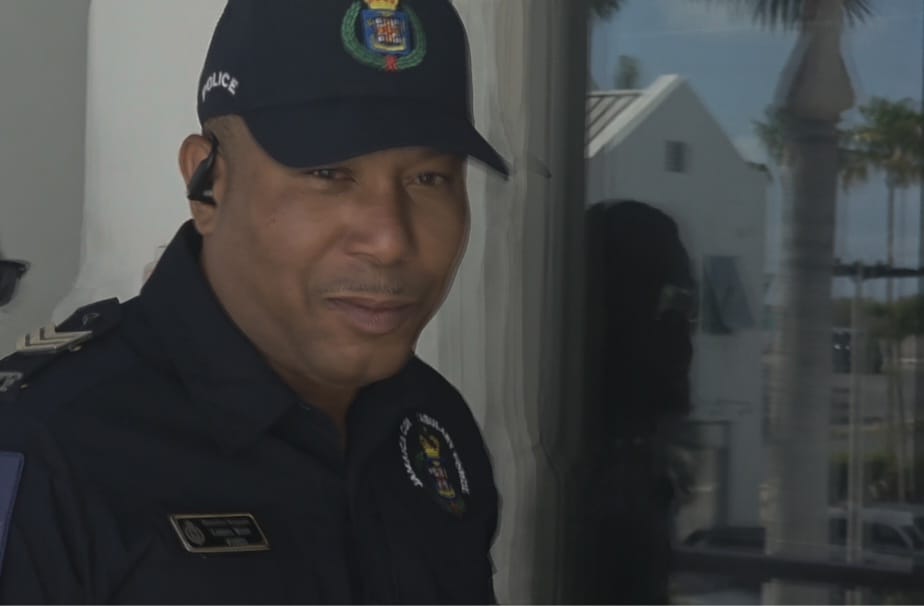
A senior Jamaican police officer SERGEANT, LARDWELL WEST who took the witness stand as one of the witnesses in the trial against the than Acting Superintendent Of Police Mr. Kurton Sutton on Thursday 19th August, reportedly attempted to challenge the presence of Eagle Legal News Court Correspondent and investigative journalist Wilkie Arthur during and at the beginning of his testimony against Sutton in the proceedings. The officer Lardwell West questioning whether the reporter (this writer) was a licensed journalist before he was commanded to stop by the presiding Learned Chief Magistrate Mr. Jolyon Hatmin, Senior Defense Attorney for Inspector Sutton and public prosecutor Ms. Maclean altogether abruptly stopped him from the line of questioning he was going.
The disrespectful attempted incident, occurred during the morning session of the trial against Sutton, when Lardwell West, identified as one of the officers connected to the alleged incident involving Inspector Sutton, was called as the second witness by the Crown in the proceedings on 19th August.
West is understood to be a senior Jamaican officer attached to the deployment of Jamaican police officers in the Turks and Caicos Islands. He reportedly came before the court in a senior rank capacity as sergeant who’s in charge and in a supervisory position.
According to the account of what unfolded in court, after West was sworn in and asked to state his name for the record, he indicated that he had something he wanted to raise before beginning his evidence.
The prosecutor initially asked whether West wanted the courtroom cleared so that he could raise the matter privately with the magistrate.
West reportedly indicated that the matter concerned the courtroom and the persons present and therefore was allowed to proceed to raise it openly.
It was at that point that the officer attempted to question the presence of Eagle Legal News in the courtroom.
West reportedly expressed concern about giving evidence while Arthur was present, questioning whether Arthur was a licensed journalist and suggesting that he should not be permitted to remain in court unless he could demonstrate that he held the appropriate journalistic credentials.
The attempt was, however, immediately shut down.
The presiding magistrate, together with members of the legal teams, reportedly intervened and instructed West to stop and proceed with his evidence.
West was not permitted to continue along that line of argument, and the proceedings continued with the witness giving evidence in the matter.
The episode raises questions about the understanding of the role of journalists and members of the public in open court proceedings, particularly where a witness seeks to place restrictions on who may observe or report on proceedings.
Courts are generally public forums unless a specific legal basis exists for excluding members of the public or restricting reporting. The presence of a journalist in a courtroom does not ordinarily depend upon the personal approval of a witness.

In this particular case, the court itself made the decision on whether the reporter could remain — and West’s attempt to challenge the reporter’s presence was stopped before he could pursue the issue further.
Local officers reportedly not to be called by Prosecutions
Another notable aspect of the proceedings is the reported decision not to rely on local officers who were present at the scene on the night in questioned as witnesses in the trial against Inspector Sutton by the prosecution.
According to the information provided and observed, it appears the prosecution is instead proceeding with testimony from officers connected to the Jamaican deployment and other foreign officers, despite local officers reportedly being present during portions of the night’s incident and gave witness statements.
The matter has now been adjourned until September 24, 2026, when proceedings are expected to continue.
The courtroom exchange involving West has added an unusual dimension to the case, particularly because the officer’s attempted challenge was not related to the facts of the incident itself, but to the identity and journalistic status of a member of the press observing the proceedings.
Eagle Legal News understands that the exchange was brought to an immediate halt by the court, allowing the witness to proceed with the evidence for which he had been called. However, the incident underscores the importance of maintaining the distinction between a witness giving evidence and a witness trying to determine who is entitled to observe his or her evidence at a trial. The latter remains a matter for the court always.
Further developments are expected when the matter returns before the court on September 24