Monday 10th August, 2026 – PROVIDENCIALES, Turks and Caicos Islands
Human trafficking is not a distant international problem affecting only larger countries—it is a reality already confronting the Turks and Caicos Islands, with trafficking cases before the courts and active investigations underway, officials warned as the territory opened its first annual Trafficking in Persons (TIP) Seminar Series.
The stark warning came as government officials, prosecutors, police officers and representatives from several departments gathered for the two-day seminar, aimed at strengthening the Islands’ ability to identify trafficking victims, investigate cases, prosecute offenders and protect some of the territory’s most vulnerable residents.
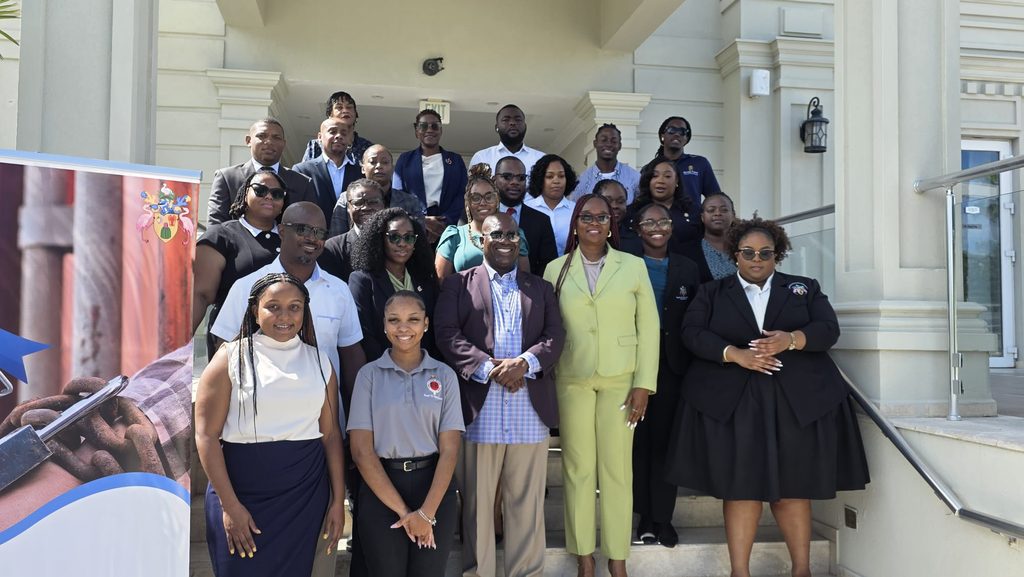
The seminar is being hosted by the Office of the Director of Public Prosecutions , in collaboration with the Department of Gender Affairs and the Trafficking Unit of the Royal Turks and Caicos Islands Police Force.
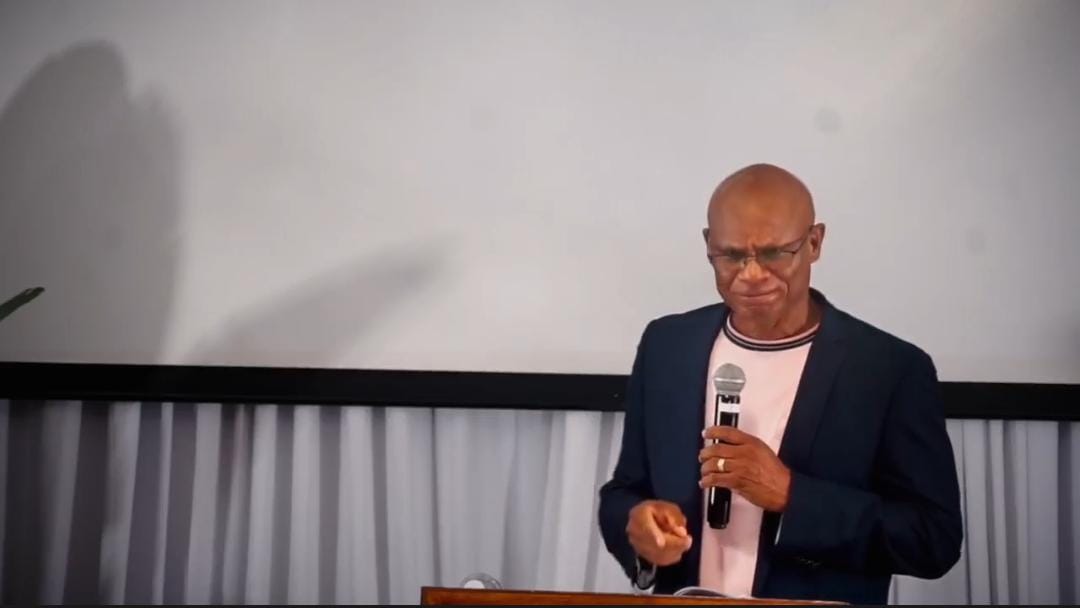
Opening the event, Acting Director of Public Prosecutions Dr. Angela Brooks sought to challenge any perception that human trafficking is a problem that exists elsewhere but has not reached the Turks and Caicos Islands.
“So, you may be here today thinking, but this is not happening in the Turks and Caicos Islands,” Brooks said in her opening remarks, before delivering a blunt warning: “We are here to enlighten you and to inform you, that this is happening in our Turks and Caicos Islands.”
According to Brooks, the Islands already have legislation specifically addressing trafficking in persons, as well as a dedicated Trafficking in Persons Unit within the Royal Turks and Caicos Islands Police Force.
Her remarks placed the seminar against the backdrop of an increasingly complex challenge—one that can involve vulnerable migrants, deceptive recruitment practices, exploitation, forced labour and sexual exploitation, while often remaining hidden from authorities.

‘A form of modern-day slavery’
Human trafficking was described during the seminar as a form of modern-day slavery, involving the movement or recruitment of people through force, coercion or deception for the purpose of exploitation.
The crime, officials explained, can involve labour exploitation, sexual exploitation or other circumstances in which traffickers financially benefit from the exploitation of another person.
And unlike many crimes that may be immediately visible, trafficking can remain concealed for significant periods of time.
Victims may be isolated, frightened, manipulated or deeply traumatized, making it difficult for investigators and prosecutors to obtain the information necessary to bring a case forward.
Brooks highlighted that human trafficking does not discriminate and can affect people regardless of age, race, gender, religion or background.
But she also pointed to one of the major vulnerabilities traffickers exploit: the desperate circumstances of people seeking a better life.

From desperate migration to exploitation
The seminar heard that trafficking can begin long before a victim reaches the country where the exploitation eventually takes place.
According to the presentation, trafficking networks can operate across international borders, with recruiters and intermediaries operating in countries of origin and transporters helping move individuals by land, air or sea.
Brooks identified Colombia and the Dominican Republic as countries of origin encountered in the Islands’ experience.
Potential migrants, she explained, may be approached through the internet, employment agencies, media advertisements or personal contacts.
In some circumstances, recruiters and middlemen share the same cultural background as the people being recruited, potentially making it easier for victims to trust them.
For migrants living in impoverished or unstable conditions, the promise of employment, legal travel documents or a more secure future can appear to offer a legitimate pathway to a better life.
But what initially appears to be an opportunity can ultimately become a trap.
Some victims may knowingly seek the assistance of smugglers to facilitate their movement from one country to another, only to discover that the arrangement they entered into was not simply transportation.
Others may be deceived from the outset.
False promises of employment, fraudulent documents and misleading information can all form part of the process.
In some cases, victims may be provided with fraudulent passports or visas and instructed on how to avoid detection by border-control authorities.
Once transported to their destination, the circumstances can change dramatically.

Documents seized, debts imposed and victims exploited
According to the seminar presentation, trafficking victims may have their immigration documents—whether genuine or fraudulent—taken from them after arrival.
The loss of those documents can further increase a victim’s dependence on the trafficker.
Victims may then be subjected to physical or sexual abuse, forced labour or sexual exploitation.
In some cases, traffickers use debts associated with the victim’s migration as another mechanism of control, forcing individuals into labour or the sex trade under the claim that they must repay what they owe for their journey.
What began as an attempt to escape poverty or seek employment can therefore become a cycle of exploitation from which victims find it extremely difficult to escape.
And that, officials say, is one reason trafficking cannot simply be viewed as an immigration issue.
It is a criminal justice issue.
It is a human rights issue.
And it is a public safety issue.
Government: ‘Our response must be comprehensive’

Minister of Public Safety, Gender and Religious Affairs and Social Welfare Hon. Shaun Malcolm told participants that trafficking represents one of the most serious violations of human dignity and human rights.
He described it as a crime that exploits vulnerable people, destroys families and leaves lasting damage on communities.
“Trafficking is a crime. It is a human rights violation. It is a threat to public safety and an assault on human dignity,” Malcolm said.
He stressed that because the problem is multifaceted, the response must be equally comprehensive.
That response, he said, cannot be limited to reacting after a trafficking offence has already occurred.
Instead, the Government must also work to create conditions that make trafficking more difficult to carry out and easier to detect.
That means strengthening legislation and enforcement, ensuring personnel are properly trained, developing effective systems to identify and protect victims, raising public awareness and addressing the vulnerabilities traffickers exploit.
The Minister also emphasized the importance of vigilance.
Traffickers, he said, do not operate within institutional boundaries—and neither can the Government’s response.
No single agency can tackle trafficking alone
One of the central themes of the seminar was the need for agencies to work together.

Police investigators may encounter victims before prosecutors become involved. Social workers may identify vulnerable individuals. Immigration and border-control officers may encounter suspicious travel arrangements. Health workers may come into contact with people suffering the consequences of exploitation.
Labour officials, child protection agencies, financial intelligence authorities and other government departments may each encounter different pieces of the same trafficking puzzle.
Malcolm said the partnership between the DPP’s Office, the Department of Gender Affairs and the RTCIPF Trafficking Division demonstrates the kind of collaboration necessary to develop a stronger national response.
He said cooperation can help agencies improve referral pathways, share information, identify weaknesses in existing systems and develop a more coordinated approach.
“Law enforcement has a critical role. Prosecutors have a critical role. The Department of Gender Affairs and social service providers have a critical role,” Malcolm said.
He added that immigration, border control, health, labour, child protection, financial intelligence and other agencies also have important responsibilities.
The message was clear: human trafficking cannot be effectively addressed by one department acting alone.
Active cases already before the courts
Perhaps one of the most significant revelations from the opening session was the confirmation that trafficking matters already exist within the Turks and Caicos Islands’ justice system.
Brooks told participants that there are trafficking matters before the courts and active matters currently being investigated.
But bringing trafficking cases to court is far from straightforward.

The very circumstances that make victims vulnerable can also make them difficult to identify and interview.
Brooks explained that some victims are well hidden, while others may be so deeply traumatized that they are reluctant or unable to provide investigators with the information required.
Fear can also prevent victims from speaking.
Some may be afraid to confront law enforcement or may have developed a deep distrust of authorities because of their experiences.
Others may simply be too emotionally troubled by what they have endured to respond to investigators.
That presents a major challenge for prosecutors and investigators attempting to build cases against traffickers.
Why victim identification matters
The seminar therefore places significant emphasis on teaching participants how to recognize victims and understand the circumstances surrounding trafficking.
Over the two-day programme, participants are expected to examine investigative techniques, victim identification, the legal framework surrounding trafficking, and trafficking through both human-rights and gender-based perspectives.
The aim is not merely to teach participants how to identify a crime.
It is to help them recognize the person behind the crime—the individual who may be frightened, manipulated, financially trapped, physically abused or psychologically traumatized.
That distinction can be critical.
A person who appears to be an undocumented migrant, for example, may also be a victim of trafficking.
A person working under suspicious conditions may not simply be an employee violating immigration or labour rules.
And someone who refuses to speak to police may not necessarily be unwilling to cooperate.
They may be afraid.
They may have been threatened.
Or they may have been conditioned by their trafficker to believe that authorities cannot help them.
The law already provides a framework
Brooks pointed out that the Turks and Caicos Islands already has legislation addressing trafficking in persons.
The Trafficking in Persons Act sets out a number of objectives, including preventing and combating trafficking in the Islands, protecting and assisting victims while having regard for their human rights, and providing for the investigation and prosecution of trafficking cases.
The legislation also provides for enforcement measures relating to trafficking offences and promotes cooperation between the Turks and Caicos Islands and other countries and territories in efforts to prevent and suppress trafficking and punish offenders.
The framework also seeks to give effect to international protocols aimed at preventing, suppressing and punishing trafficking in persons.
The existence of legislation, however, is only one part of the equation.
Officials stressed that laws must be supported by trained investigators, prosecutors, social-service workers and other professionals who understand how trafficking operates.
‘We must first understand’
Brooks described trafficking as an “egregious act against humanity” that strips people of their dignity and leaves victims traumatized.
She described it as a global, complex and heartbreaking issue—and one that the Turks and Caicos Islands must confront as a reality.
“If we want to effectively eradicate modern day slavery, we must first understand what causes human trafficking and recognize the effects of human trafficking on those involved,” she said.
Only by understanding those factors, she argued, can authorities begin developing strategic responses that stop the crime while genuinely helping victims.
That philosophy appears to be at the heart of the seminar.
Rather than treating trafficking solely as an enforcement matter, organizers are bringing together law enforcement, prosecutors, social protection personnel and other stakeholders to examine the issue from multiple perspectives.
A warning to traffickers—and a message to victims
For Malcolm, the seminar also sends a message to those who profit from the exploitation of others.
By investing in training and institutional capacity, he said, the Turks and Caicos Islands is making it clear that the territory will not be a safe haven for traffickers.
But the Minister also emphasized that success should not be measured solely by arrests and convictions.
The real test, he said, will be the strength of the systems established to identify victims, the quality of investigations and prosecutions, the support offered to people who have been exploited and the ability to prevent trafficking from becoming entrenched in communities.
That means the Islands’ anti-trafficking strategy must operate on two fronts at once: holding traffickers accountable while ensuring victims are protected rather than further victimized by the system.
Malcolm urged participants to use the seminar to ask difficult questions, share experiences and identify weaknesses in the existing system.
He encouraged them to examine what can be done differently and what can be done better.
Most importantly, he said, the focus must remain on ensuring that victims are identified, protected and supported, while those who profit from human exploitation are held accountable.
A broader challenge for the Turks and Caicos
The warning comes at a time when the Turks and Caicos Islands continues to experience significant migration pressures and maintains close connections with countries throughout the region.
Those realities make vigilance particularly important.
Trafficking and migrant smuggling are not necessarily the same thing, and authorities must be able to distinguish between individuals who voluntarily seek transportation and those who become victims of exploitation.
But the circumstances surrounding irregular migration can create opportunities for traffickers to exploit vulnerable people.
A person who begins a journey voluntarily can still become a trafficking victim through deception, coercion or exploitation.
That is why officials are emphasizing the need for better-trained personnel who can identify warning signs and understand the complex relationship between migration, vulnerability and exploitation.
‘Our response must be coordinated, compassionate and informed’
The first annual Trafficking in Persons Seminar Series is ultimately about strengthening that response.
Malcolm commended the Office of the DPP, the Department of Gender Affairs and the RTCIPF Trafficking Division for organizing the initiative and praised the facilitators and participants for bringing their expertise and experience to the forum.
He called for continued efforts to strengthen partnerships and institutional capacity.
The ultimate goal, he said, is a trafficking response that is “coordinated, compassionate, informed, and uncompromising in the pursuit of justice.”
For the Turks and Caicos Islands, the seminar represents more than another government training exercise.
It is an acknowledgment that human trafficking is already a local concern.
There are cases before the courts.
There are active investigations.
And behind every potential trafficking case is a person who may have been deceived, threatened, exploited or stripped of their dignity.
The challenge now is whether the systems being strengthened can find those victims, protect them and ensure that the people responsible for exploiting them face justice.
As the two-day seminar gets underway, the message from the territory’s prosecutors, police and Government is unmistakable:
Human trafficking is happening in the Turks and Caicos Islands—and the fight against modern-day slavery must begin with recognizing it, understanding it and refusing to allow it to remain hidden.